U.S. Senate · Oklahoma
Sen. Alan Armstrong
Where they sit
Seated by voting record in the Senate. Percentiles run from 0 (most liberal) to 100 (most conservative).
Alan Armstrong's seat is marked. Seats run from most liberal (left) to most conservative (right). Color shows how often each member crosses party lines toward the middle on votes that divide the parties: solid blue or red means almost never, and purple means on at least 1 in 10 of those votes. Gray seats are members too new to score. How this is measured
This score measures who votes with whom. A member who votes no because a bill goes too far, or not far enough, can look more moderate than their views.
With their party and with the President
How this is measured →Highest of all 53 Senate Republicans.
Expected is the typical score for senators of the same party whose states voted like this one for president in 2024.
Each line is one Senate member, grouped by party. The dot is Alan Armstrong. The dark line is what we'd expect given how this state voted for president in 2024.
How this is measuredHighest of all 53 Senate Republicans.
Expected is the typical score for senators of the same party whose states voted like this one for president in 2024.
Each line is one Senate member, grouped by party. The dot is Alan Armstrong. The dark line is what we'd expect given how this state voted for president in 2024.
How this is measuredWhere they broke ranks
No breaks with their party or the President this Congress.
Every vote
Every roll call in the Senate this Congress, with how Alan Armstrong voted, how their party voted and the President's position.
| Date | Vote | Their vote | Most of their party | President wanted | Result |
|---|---|---|---|---|---|
| Loading… | |||||
A dash means the parties didn't split on that vote, or the President took no public position before it. “Party-line” and “President took a position” list exactly the votes each score counts: the ones cast Yes or No. Missed votes don't count either way and are under “Missed”.
Votes most like
Alan Armstrong and James Lankford voted the same way on 99% of votes.
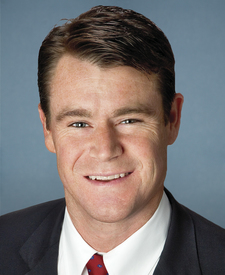 Sen. Todd Young
Voted the same way 100% of the time
 Sen. Tom Cotton
Voted the same way 99% of the time
 Sen. Deb Fischer
Voted the same way 99% of the time
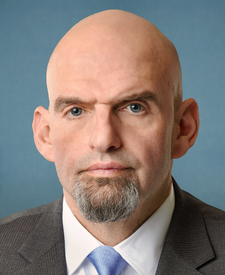 Sen. John Fetterman
Closest member of the other party · Voted the same way 29% of the time
Oklahoma
Oklahoma's delegation →How Oklahoma voted for president in 2024
Contact
- Phone
- 202-224-4721
- Office
- 330 Hart Senate Office Building Washington DC 20510
Issue by issue
How often Alan Armstrong votes with their party, and with the President, on each kind of issue. Issues are the policy areas Congress assigns to each bill. "With their party" counts only votes where most Democrats and most Republicans voted on opposite sides; "With the President" counts only votes where he took a public position first.
Alan Armstrong votes with their party about equally often on every issue.
Fewer than 5 party-line votes, so not charted: Government Operations and Politics (4 votes), Congress (4 votes), Finance and Financial Sector (4 votes), Sports and Recreation (3 votes), Public Lands and Natural Resources (3 votes), Armed Forces and National Security (3 votes), Environmental Protection (3 votes), Health (2 votes), Energy (1 vote), Taxation (1 vote), Education (1 vote), Families (1 vote).
Alan Armstrong votes with the President about equally often on every issue.
Fewer than 5 votes where the President took a position, so not charted: Economics and Public Finance (2 votes), Sports and Recreation (2 votes), Immigration (1 vote), Public Lands and Natural Resources (1 vote), Energy (1 vote).
Bipartisan bills led
1 passed their chamber · 0 became law
-
S. 5600 · Dennis John Benigno Traumatic Brain Injury Program Reauthorization Act of 2026Sponsor · Introduced Sept. 29, 2026 · HealthPassed one chamber
-
S. 5299 · Native Language Educators in Classrooms ActCo-lead · Introduced Aug. 6, 2026 · Native AmericansIntroduced
Votes: Voteview (UCLA). Bills: Congress.gov. President's positions: our public list. 2024 results by district: The Downballot. How this is measured · Corrections