U.S. Senate · Mississippi
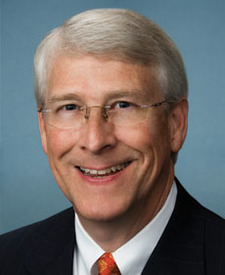
Sen. Roger F. Wicker
Where they sit
Seated by voting record in the Senate. Percentiles run from 0 (most liberal) to 100 (most conservative).
Roger F. Wicker's seat is marked. Seats run from most liberal (left) to most conservative (right). Color shows how often each member crosses party lines toward the middle on votes that divide the parties: solid blue or red means almost never, and purple means on at least 1 in 10 of those votes. Gray seats are members too new to score. How this is measured
This score measures who votes with whom. A member who votes no because a bill goes too far, or not far enough, can look more moderate than their views.
With their party and with the President
How this is measured →Lower than 40 of 53 Senate Republicans.
Expected is the typical score for senators of the same party whose states voted like this one for president in 2024.
Each line is one Senate member, grouped by party. The dot is Roger F. Wicker. The dark line is what we'd expect given how this state voted for president in 2024.
How this is measuredHighest of all 53 Senate Republicans.
Expected is the typical score for senators of the same party whose states voted like this one for president in 2024.
Each line is one Senate member, grouped by party. The dot is Roger F. Wicker. The dark line is what we'd expect given how this state voted for president in 2024.
How this is measuredWhere they broke ranks
Votes where Roger F. Wicker went against most of their party or against the President's stated position.
Every vote
Every roll call in the Senate this Congress, with how Roger F. Wicker voted, how their party voted and the President's position.
| Date | Vote | Their vote | Most of their party | President wanted | Result |
|---|---|---|---|---|---|
| Loading… | |||||
A dash means the parties didn't split on that vote, or the President took no public position before it. “Party-line” and “President took a position” list exactly the votes each score counts: the ones cast Yes or No. Missed votes don't count either way and are under “Missed”.
Votes most like
Roger F. Wicker and Cindy Hyde-Smith voted the same way on 99% of votes.
Voted the same way 100% of the time
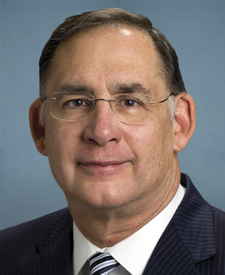 Sen. John Boozman
Voted the same way 100% of the time
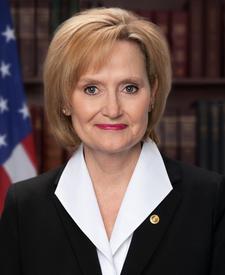 Sen. Cindy Hyde-Smith
Voted the same way 99% of the time
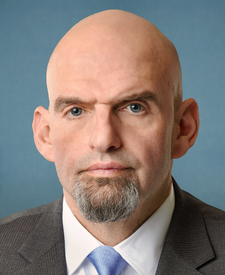 Sen. John Fetterman
Closest member of the other party · Voted the same way 27% of the time
Mississippi
Mississippi's delegation →How Mississippi voted for president in 2024
Contact
- Phone
- 202-224-6253
- Office
- 425 Russell Senate Office Building Washington DC 20510
- Contact form
- www.wicker.senate.gov
Issue by issue
How often Roger F. Wicker votes with their party, and with the President, on each kind of issue. Issues are the policy areas Congress assigns to each bill. "With their party" counts only votes where most Democrats and most Republicans voted on opposite sides; "With the President" counts only votes where he took a public position first.
Roger F. Wicker votes with their party about equally often on every issue.
Fewer than 5 party-line votes, so not charted: Sports and Recreation (4 votes), Foreign Trade and International Finance (4 votes), Health (3 votes), Emergency Management (2 votes), Crime and Law Enforcement (1 vote), Science, Technology, Communications (1 vote), Education (1 vote), Families (1 vote).
Roger F. Wicker votes with the President about equally often on every issue.
Fewer than 5 votes where the President took a position, so not charted: Finance and Financial Sector (4 votes), Government Operations and Politics (3 votes), Sports and Recreation (3 votes), Foreign Trade and International Finance (3 votes), Taxation (2 votes), Emergency Management (2 votes), Immigration (1 vote), Crime and Law Enforcement (1 vote), Housing and Community Development (1 vote).
Bipartisan bills led
4 passed their chamber · 1 became law
-
S. 4138 · A bill to waive the 60-day notice requirement for the posthumous honorary promotion of Captain Cody Khork, United States Army.Sponsor · Introduced March 18, 2026 · Armed Forces and National SecurityBecame law
-
S. 4164 · A bill to make technical corrections to the National Defense Authorization Act for Fiscal Year 2026.Sponsor · Introduced March 23, 2026 · CongressPassed one chamber
-
S. 3266 · USMMA Athletics Act of 2026Sponsor · Introduced Nov. 20, 2025 · Transportation and Public WorksPassed one chamber
-
S. 434 · Space Commerce Advisory Committee ActCo-lead · Introduced Feb. 5, 2025 · Science, Technology, CommunicationsPassed one chamber
-
S. 5463 · National American History and Founders Month ActSponsor · Introduced Sept. 23, 2026 · Government Operations and PoliticsIntroduced
-
S. 5396 · No Fencing at the United States Capitol Complex ActCo-lead · Introduced Sept. 15, 2026 · CongressIntroduced
-
S. 5279 · National American History and Founders Month ActSponsor · Introduced Aug. 6, 2026 · Government Operations and PoliticsIntroduced
-
S. 5332 · Cooperative Institute Act of 2026Co-lead · Introduced Aug. 6, 2026 · Public Lands and Natural ResourcesIntroduced
-
S. 5213 · SMASH 2.0 ActCo-lead · Introduced Aug. 3, 2026 · HealthIntroduced
-
S. 5095 · Tire Safety Modernization Act of 2026Sponsor · Introduced July 23, 2026 · Transportation and Public WorksIntroduced
-
S. 5131 · CORE Pacific ActCo-lead · Introduced July 23, 2026 · International AffairsIntroduced
-
S. 4720 · Protecting U.S. Fishers from Illegal Foreign Flags Act of 2026Co-lead · Introduced June 9, 2026 · Public Lands and Natural ResourcesIntroduced
-
S. 4568 · Nursing is a Professional Degree ActCo-lead · Introduced May 19, 2026 · HealthIntroduced
-
S. 4541 · Senator Paul Simon Study Abroad Program Act of 2026Co-lead · Introduced May 14, 2026 · EducationIntroduced
-
S. 4154 · Research and Oversight of AI in Courts Act of 2026Sponsor · Introduced March 19, 2026 · LawIntroduced
-
S. 3791 · Regional Ocean Partnerships Reauthorization ActSponsor · Introduced Feb. 5, 2026 · Transportation and Public WorksIntroduced
-
S. 3672 · NASA Talent Exchange Program ActCo-lead · Introduced Jan. 15, 2026 · Science, Technology, CommunicationsIntroduced
-
S. 3678 · Voluntary Limited Accreditation for Adoption Services ActSponsor · Introduced Jan. 15, 2026 · International AffairsIntroduced
-
S. 3465 · UPGRADE Act of 2025Co-lead · Introduced Dec. 11, 2025 · Environmental ProtectionIntroduced
-
S. 3304 · Medical Foods and Formulas Access Act of 2025Sponsor · Introduced Dec. 2, 2025 · HealthIntroduced
-
S. 2914 · Eastern Flank Strategic Partnership Act of 2025Sponsor · Introduced Sept. 19, 2025 · International AffairsIntroduced
-
S. 2723 · Treatment Court, Rehabilitation, and Recovery Act of 2025Co-lead · Introduced Sept. 4, 2025 · Crime and Law EnforcementIntroduced
-
S. 2652 · Pacific Ready Coast Guard ActCo-lead · Introduced Aug. 1, 2025 · Transportation and Public WorksIntroduced
-
S. 2580 · Promoting American Competition in Aquaculture Research ActSponsor · Introduced July 31, 2025 · Agriculture and FoodIntroduced
-
S. 2581 · A bill to reauthorize the National Sea Grant College Program.Co-lead · Introduced July 31, 2025 · Public Lands and Natural ResourcesIntroduced
-
S. 2586 · MARA Act of 2025Sponsor · Introduced July 31, 2025 · Public Lands and Natural ResourcesIntroduced
-
S. 2628 · Catastrophic Specialty Hospital Act of 2025Co-lead · Introduced July 31, 2025 · HealthIntroduced
-
S. 2303 · Promoting Physical Activity for Americans ActSponsor · Introduced July 16, 2025 · HealthIntroduced
-
S. 2126 · Integrated Ocean Observation System Reauthorization Act of 2025Sponsor · Introduced June 18, 2025 · Public Lands and Natural ResourcesIntroduced
-
S. 2004 · Maternal and Infant Syphilis Prevention ActCo-lead · Introduced June 10, 2025 · HealthIntroduced
-
S. 1898 · ORBITS Act of 2025Co-lead · Introduced May 22, 2025 · Science, Technology, CommunicationsIntroduced
-
S. 1909 · Western Balkans Democracy and Prosperity ActCo-lead · Introduced May 22, 2025 · International AffairsIntroduced
-
S. 1656 · Vieques Recovery and Redevelopment ActSponsor · Introduced May 7, 2025 · Government Operations and PoliticsIntroduced
-
S. 1548 · Nurse Corps Tax Parity Act of 2025Sponsor · Introduced May 1, 2025 · TaxationIntroduced
-
S. 1501 · SAFE Act of 2025Sponsor · Introduced April 28, 2025 · Agriculture and FoodIntroduced
-
S. 1480 · American Infrastructure Bonds Act of 2025Sponsor · Introduced April 10, 2025 · TaxationIntroduced
-
S. 1481 · LOCAL Infrastructure ActSponsor · Introduced April 10, 2025 · TaxationIntroduced
-
S. 1484 · FORECAST Act of 2025Co-lead · Introduced April 10, 2025 · Science, Technology, CommunicationsIntroduced
-
S. 1380 · SPARC ActCo-lead · Introduced April 9, 2025 · HealthIntroduced
-
S. 1261 · CONNECT for Health Act of 2025Co-lead · Introduced April 2, 2025 · HealthIntroduced
-
S. 1078 · Mississippi River Basin Fishery Commission ActSponsor · Introduced March 14, 2025 · Public Lands and Natural ResourcesIntroduced
-
S. 1080 · Dental Loan Repayment Assistance Act of 2025Sponsor · Introduced March 14, 2025 · TaxationIntroduced
-
S. 1050 · Forest Conservation Easement Program Act of 2025Co-lead · Introduced March 13, 2025 · Public Lands and Natural ResourcesIntroduced
-
S. 822 · Scientific EXPERT Act of 2025Co-lead · Introduced March 3, 2025 · HealthIntroduced
-
S. 755 · Finn Sawyer Access to Cancer Testing ActSponsor · Introduced Feb. 26, 2025 · HealthIntroduced
-
S. 574 · Healthy Poultry Assistance and Indemnification Act of 2025Sponsor · Introduced Feb. 13, 2025 · Agriculture and FoodIntroduced
-
S. 459 · Amateur Radio Emergency Preparedness ActSponsor · Introduced Feb. 6, 2025 · Science, Technology, CommunicationsIntroduced
-
S. 323 · PLAN for Broadband ActSponsor · Introduced Jan. 29, 2025 · Science, Technology, CommunicationsIntroduced
-
S. 258 · TORNADO ActSponsor · Introduced Jan. 27, 2025 · Science, Technology, CommunicationsIntroduced
Votes: Voteview (UCLA). Bills: Congress.gov. President's positions: our public list. 2024 results by district: The Downballot. How this is measured · Corrections