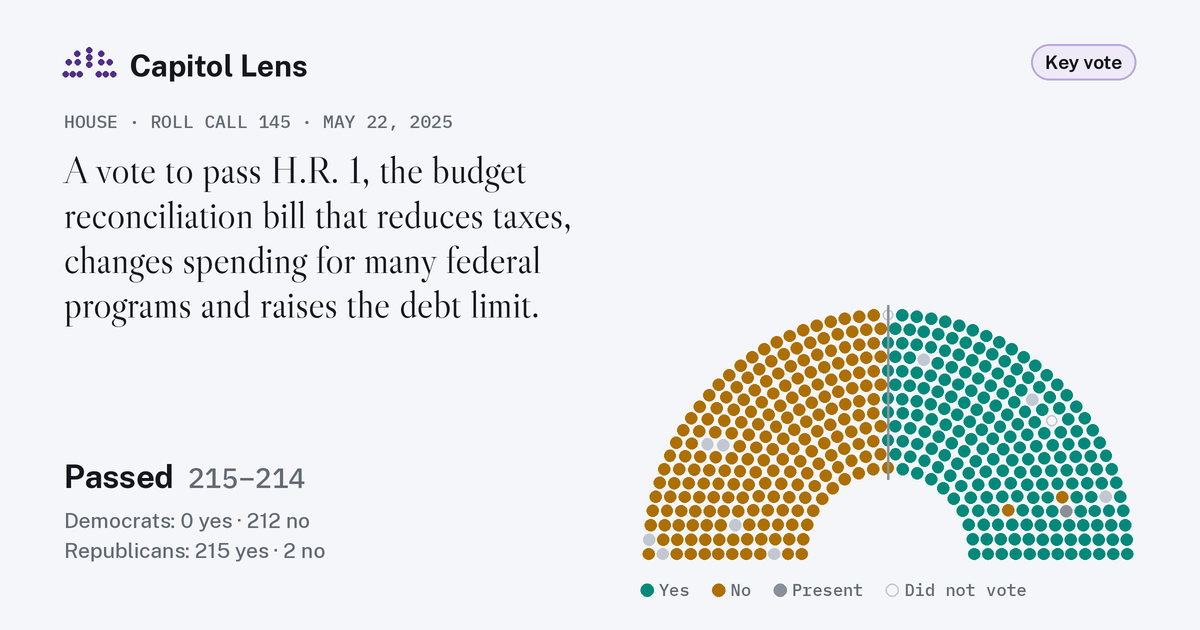
One Big Beautiful Bill Act (H.R. 1) · House · Roll call 145 · 1st session · May 22, 2025 A vote to pass H.R. 1, the budget reconciliation bill that reduces taxes, changes spending for many federal programs and raises the debt limit.
Why it matters: The reconciliation bill reduces taxes, reduces or increases spending for various federal programs, raises the legal limit on federal debt and changes agencies and programs across the federal government. Drafted and checked with AI
How did your own members vote? Find them by address or ZIP code
- Question
- On Passage
- Official record
- House roll call 145, 119th Congress, 1st session
- Capitol Lens ID
- h144, used in this page's address. It numbers every House roll call of the 119th Congress in order, so it differs from the official number, which restarts each session.
- Bill
- H.R. 1, An act to provide for reconciliation pursuant to title II of H. Con. Res. 14.
How each party voted
Most Democrats voted No (212 of 212).
Most Republicans voted Yes (215 of 220).
Party-line vote: most Democrats and most Republicans voted on opposite sides.
President's positions
The President's position: wanted a Yes vote
“The Administration strongly supports passage of H.R. 1, the One Big Beautiful Bill Act.”
Source: White House statement on the bill · Checked against the statement (AI-assisted)
About this vote
H.R. 1 is the budget reconciliation bill under H.Con.Res. 14. It reduces taxes, reduces or increases spending for various federal programs, raises the statutory debt limit, and makes other changes to agencies and programs across the federal government. Reconciliation is a budget process for changing taxes, spending and the debt limit. The bill passed the House.
This summary was drafted and checked with AI (Claude) using only the official record of the vote. Report an error
Summary by the Congressional Research Service
This act reduces taxes, reduces or increases spending for various federal programs, increases the statutory debt limit, and otherwise addresses agencies and programs throughout the federal government.